Why Every Vehicle We Assess Makes the Next Assessment Better
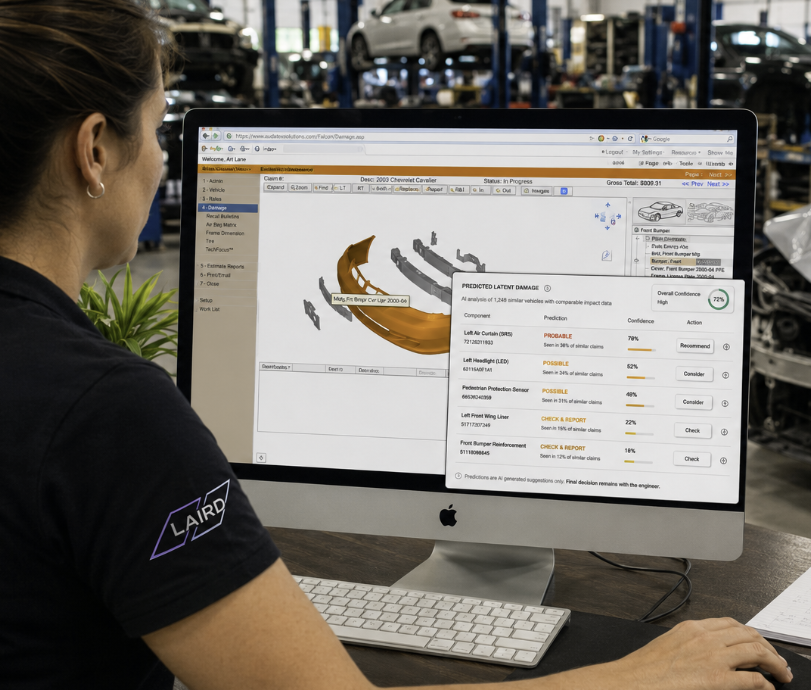
When we first introduced Project X-Ray, we explained how we're using predictive intelligence to help identify damage that may not yet be visible during a vehicle assessment.
That capability is already changing how we approach engineering, but it's only the beginning.
The real innovation is building an engineering intelligence platform that continuously learns from real-world outcomes, allowing every completed assessment to improve the next.
Engineering First. AI Second.
Artificial intelligence is only ever as good as the information it learns from. In assessing, generic AI models simply don't have access to the thousands of engineering decisions, repair outcomes and technical observations that we've made every day for the last 26 years.
At Laird, every report is prepared and signed off by a qualified engineer. That means every prediction made by Project X-Ray is ultimately validated by engineering judgement before becoming part of its growing knowledge base. Rather than replacing engineers, the system is learning from them.
Turning Experience into Engineering Intelligence
Traditionally, engineering knowledge has existed largely in people's heads. An experienced assessor instinctively recognises that a particular impact on a certain model often results in hidden suspension damage, damaged ADAS components or deformation behind apparently minor panel damage.
Project X-Ray begins to capture that collective experience. Each completed case contributes information such as:
* Vehicle make, model and specification
* Damage location and severity
* Hidden damage discovered during repair
* Parts replaced versus repaired
* Repair methods used
* Calibration requirements
* Supplementary estimates
* Final repair costs
* Repair duration
* Engineering decisions and rationale
Over time, these relationships build into a continuously expanding engineering knowledge base.
Learning From Every Decision
One of the most powerful aspects of Project X-Ray is that it learns what's wrong, what's right & is given a percentage score to understand how close or far off it was.
If the system predicts that lidar damage is likely but the engineer determines that only say the mounting bracket requires replacement, that decision becomes part of the learning process. Likewise, if a hidden structural issue is discovered that wasn't originally predicted, the system captures that outcome too.
Every agreement, every correction and every engineering judgement helps refine future predictions. This creates a continuous feedback loop where every completed assessment makes the platform incrementally more accurate.
Project X-Ray is constantly evolving.
Human Expertise Remains Central
As vehicle technology continues to advance, engineering judgement becomes increasingly important. EVs, advanced driver assistance systems, sophisticated sensors and complex repair methodologies mean that no AI system should ever be making independent engineering decisions.
Project X-Ray has been designed around a Human-in-the-Loop approach, as almost all this type of AI is within Laird.
The technology identifies patterns, highlights probabilities and surfaces engineering insights that might otherwise be overlooked. The engineer remains responsible for interpreting that information, carrying out the assessment and signing the final report.
The responsibility, accountability and professional judgement always remain with the engineer.
Building Something That Doesn't Exist Elsewhere
Every vehicle assessed adds another layer of technical understanding.
Every repair outcome improves future predictions.
Every engineering decision strengthens the intelligence behind the platform.
Over time, this creates something that cannot simply be purchased or copied. It becomes a proprietary engineering knowledge base, built from hundreds of thousands of real assessments undertaken by our engineers for over 26 years.
While artificial intelligence itself is becoming increasingly accessible, the quality of the engineering data behind it is what ultimately determines its value. That is where we believe the future lies.
Capturing our data, refining it and making it available to support better engineering decisions for every assessment that follows.