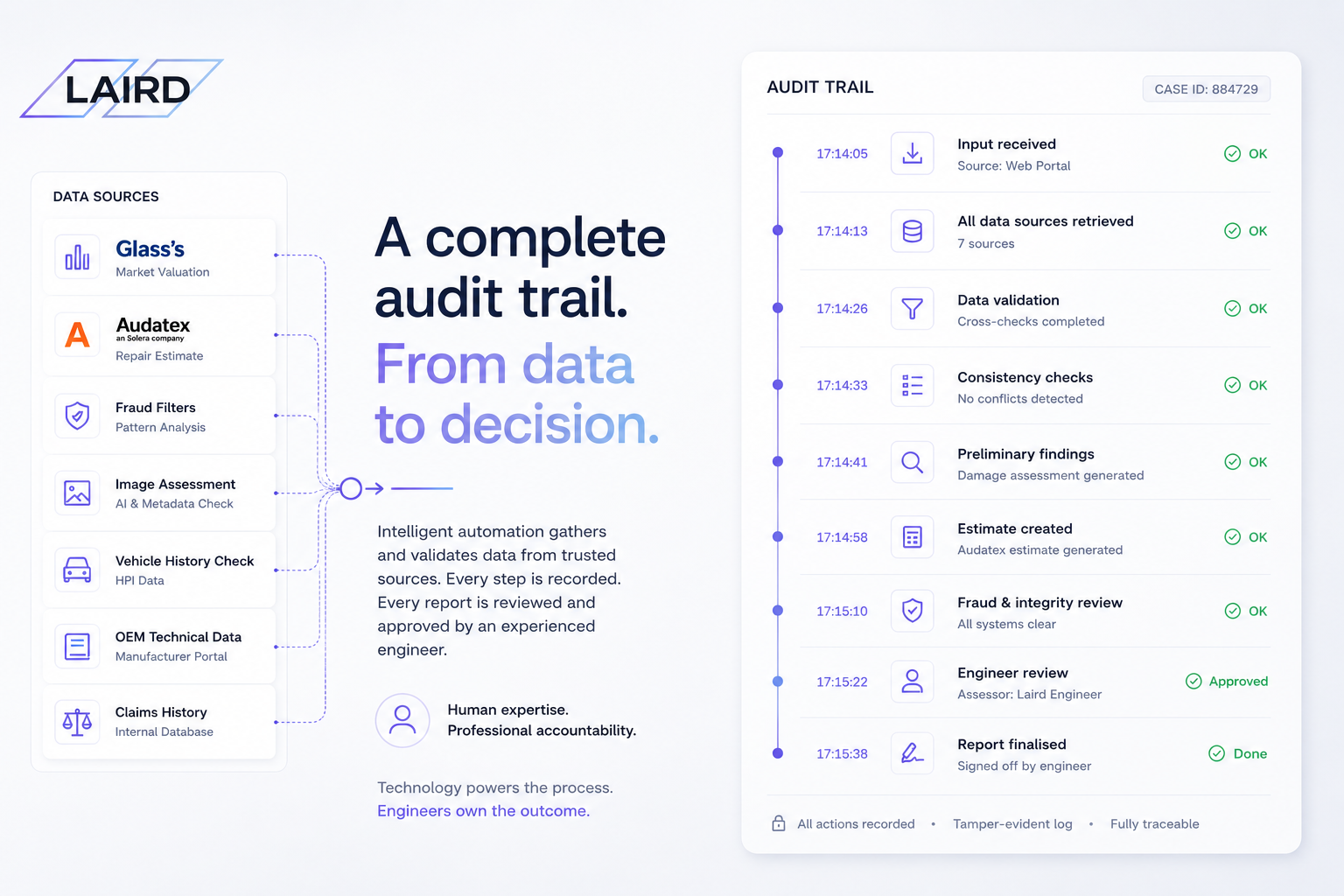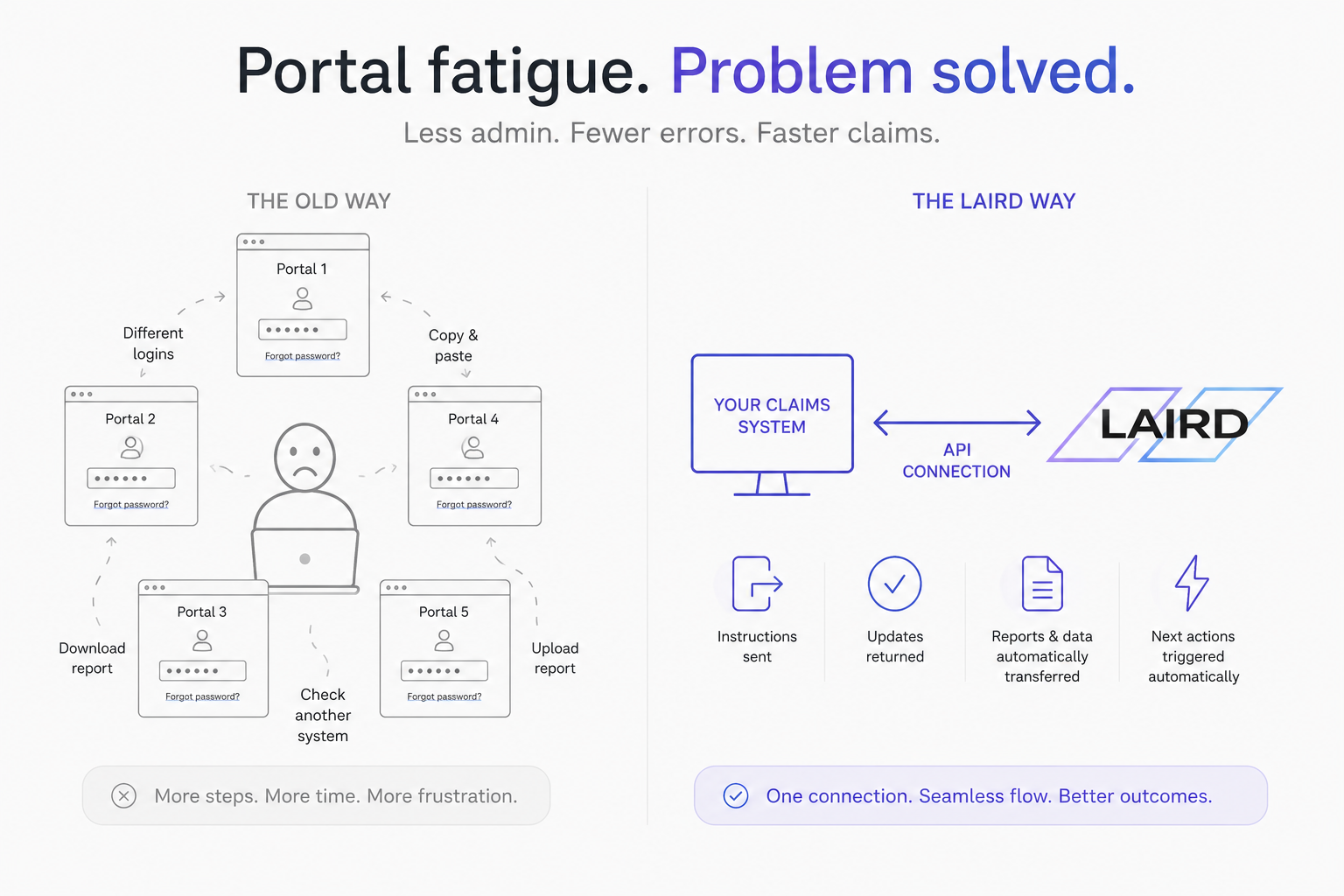
Portals were once a big improvement in claims handling, but for many claims handlers they have become another layer of admin. Another login, another password, another browser tab, another place to check for updates.
The bigger problem is duplication. Claim details already exist in the client's own system, yet they often have to be copied into a supplier portal. When the assessment is complete, reports, estimates, images and key information then have to be downloaded, rekeyed or copied back again. That takes time and creates unnecessary opportunities for error.
API connections remove much of that friction by allowing Laird's systems to communicate directly with the client's claims platform, whether that be bespoke or a CRM such as Proclaim. Instructions can be sent to Laird automatically, including claim references, vehicle details, repairer information and supporting documents, without the handler entering the same information twice.
The information can then flow back in the same way. Assessment status, repair costs, valuations, total loss decisions, supplementary outcomes, reports and other key data can be returned directly into the client's system as the claim progresses.
For the claims handler, the benefit is simple: fewer logins, less copy and paste, fewer manual updates and less time spent checking another system. Instead of going to a portal to find out what has happened, the relevant information comes back into the system they already use.
APIs also make automation possible. A completed assessors report or VDA can update the claim automatically, a total loss decision can trigger the next workflow, such as salvage agent instruction, or an approved repair can move straight to the next stage without somebody manually transferring the information. The hire car teams
We still have a portal & indeed it still has its place, particularly for occasional users or clients who do not need a full integration. But for higher-volume claims operations, the better model is increasingly clear.
The claims handler should work in their own system, Laird should work in ours, and the technology should connect the two.
Find out more here: https://www.laird-assessors.com/technology/