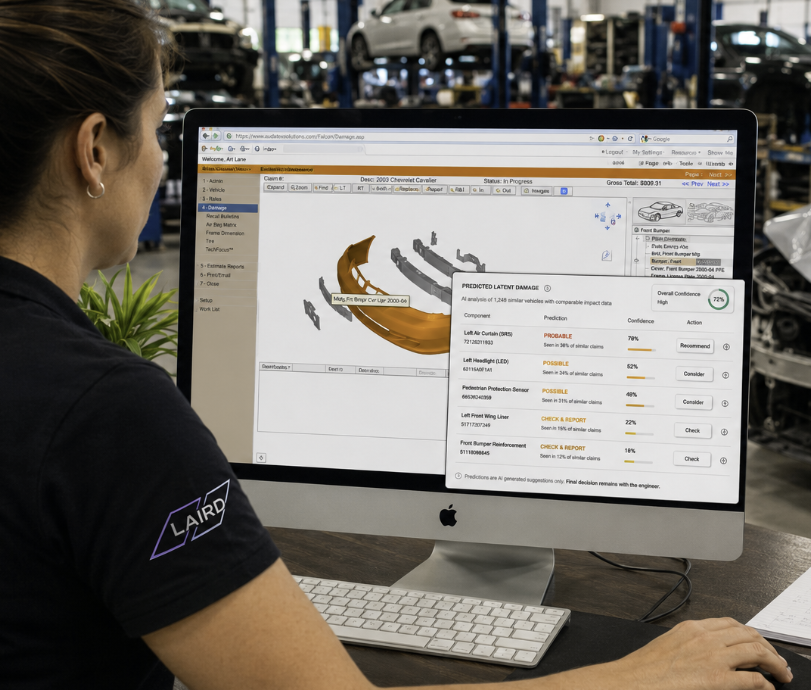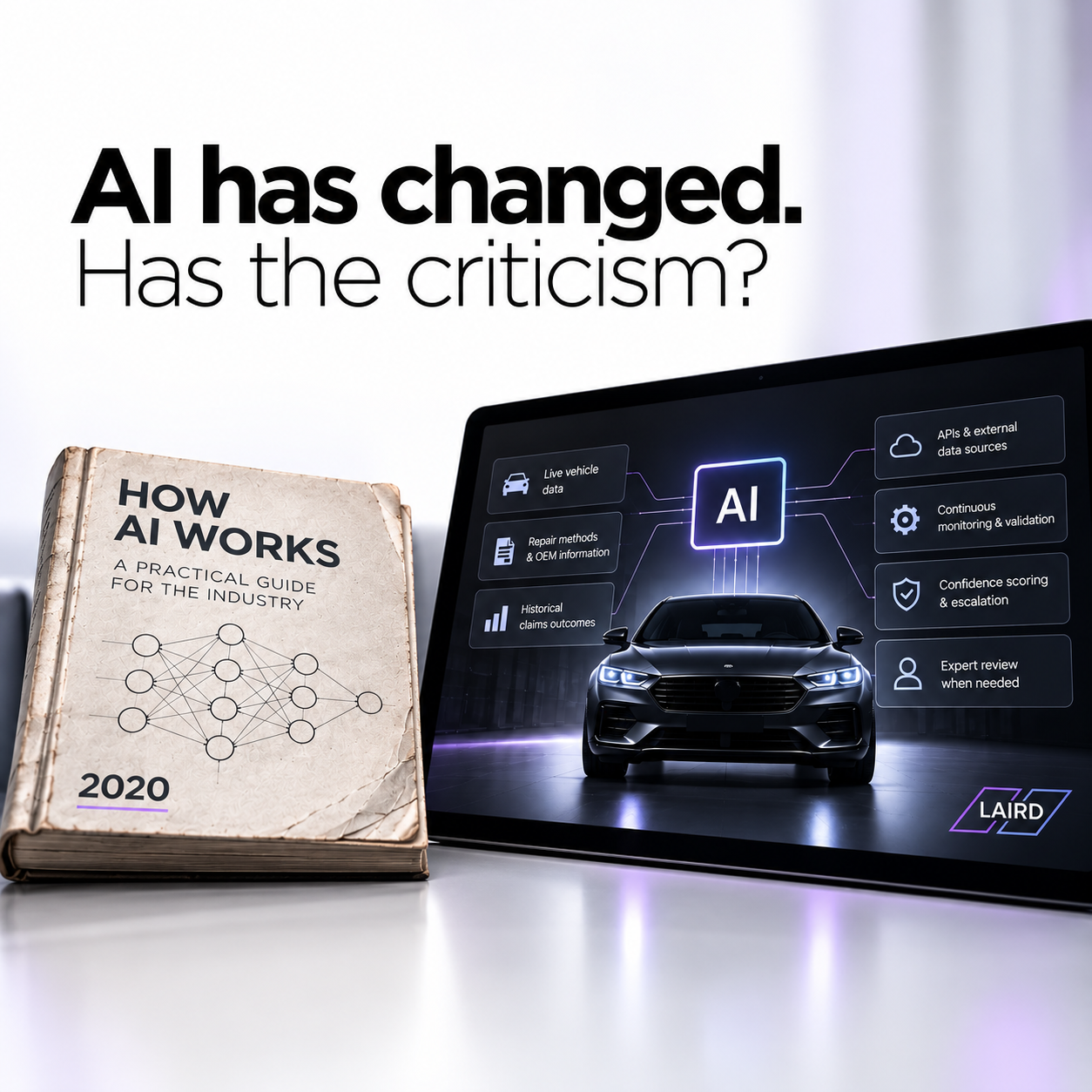
As the world of claims management evolves, AI has emerged as a powerful force driving innovation. At Laird we've used AI and automation to dramatically transform over the last few years.
At Laird, we believe that as AI continues to play an increasingly significant role in the industry, it's crucial for businesses to not only embrace its potential but also to navigate its challenges responsibly.
The Promise and Potential of AI in Claims Management
Some key areas where AI is making a significant impact include:
Damage Assessment Automation: AI systems can now assess vehicle damage using advanced image recognition
Fraud Detection: AI-driven fraud detection systems are capable of identifying suspicious patterns
Predictive Analytics: AI models can predict the outcome of claims based on historical data
Transparency: The Need for Explainable & Ethical AI
One of the most pressing ethical issues is transparency. AI algorithms can often function as "black boxes."
By adopting explainable AI, claims management firms can ensure that their AI systems are not only efficient but also accountable and trustworthy.
Bias and Fairness: Avoiding Discriminatory Practices
AI systems are only as good as the data they are trained on. To avoid bias issues, it's essential to carefully curate the data used to train AI models.
The Role of Human Oversight
Human oversight is particularly important in complex or contentious claims where nuance and empathy are required.
By combining AI with human expertise, claims management firms can leverage the best of both worlds.