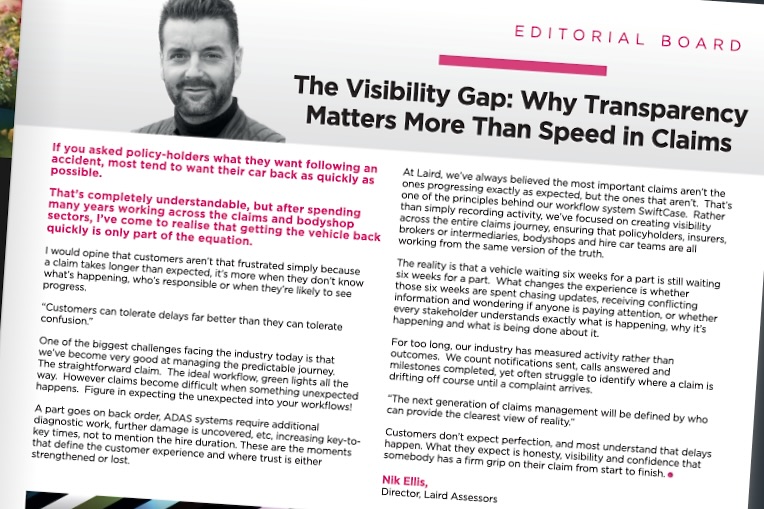
If you asked policy-holders what they want following an accident, most tend to want their car back as quickly as possible.
That's completely understandable, but after spending many years working across the claims and bodyshop sectors, I've come to realise that getting the vehicle back quickly is only part of the equation.
I would opine that customers aren’t that frustrated simply because a claim takes longer than expected, it’s more when they don't know what's happening, who's responsible or when they're likely to see progress.
“Customers can tolerate delays far better than they can tolerate confusion."
One of the biggest challenges facing the industry today is that we've become very good at managing the predictable journey. The straightforward claim. The ideal workflow, green lights all the way. However claims become difficult when something unexpected happens. Figure in expecting the unexpected into your workflows!
A part goes on back order, ADAS systems require additional diagnostic work, further damage is uncovered, etc, increasing key-to-key times, not to mention the hire duration. These are the moments that define the customer experience and where trust is either strengthened or lost.
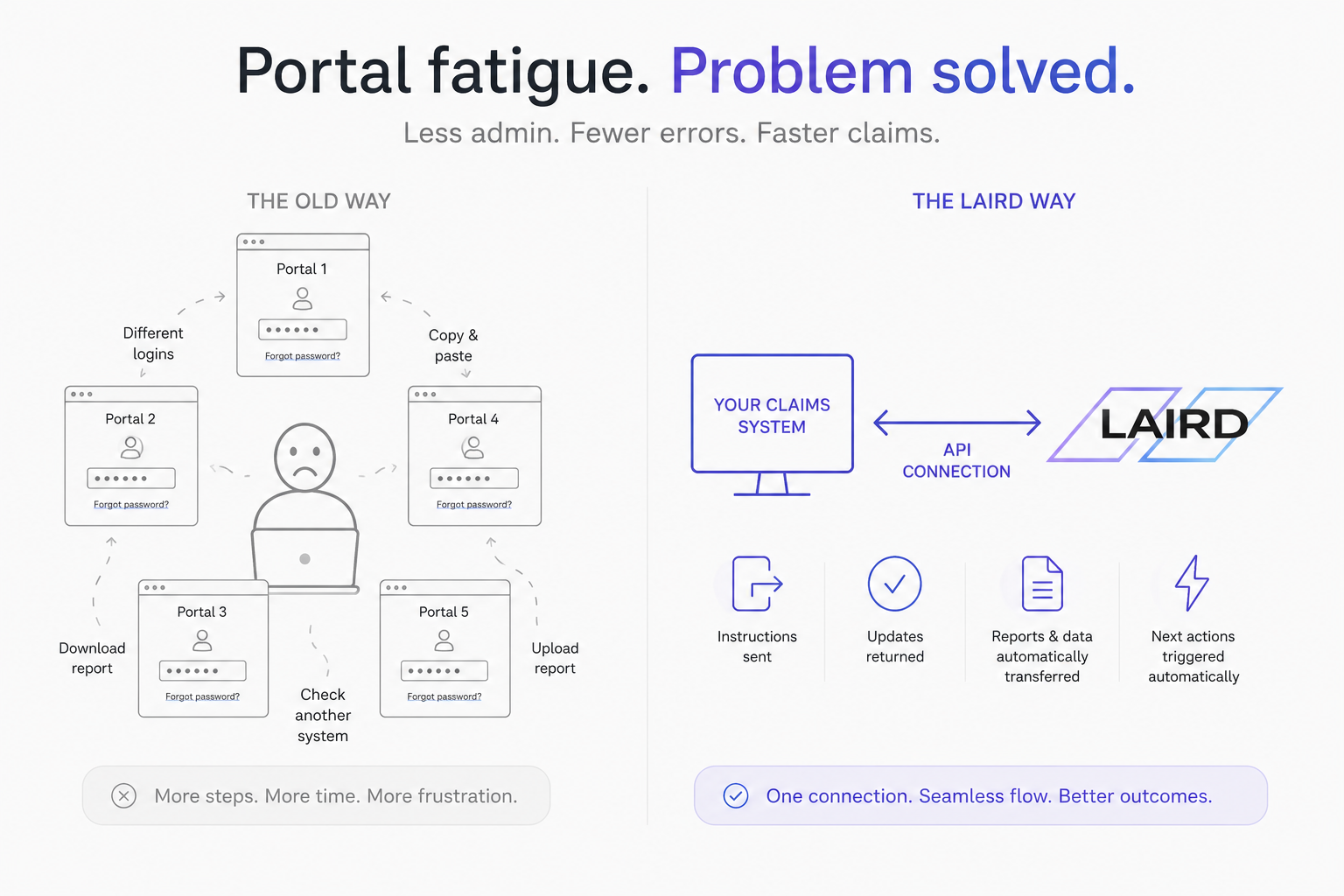
At Laird, we've always believed the most important claims aren't the ones progressing exactly as expected, but the ones that aren't. That's one of the principles behind our workflow system SwiftCase. Rather than simply recording activity, we've focused on creating visibility across the entire claims journey, ensuring that policyholders, insurers, brokers or intermediaries, bodyshops and hire car teams are all working from the same version of the truth.
The reality is that a vehicle waiting six weeks for a part is still waiting six weeks for a part. What changes the experience is whether those six weeks are spent chasing updates, receiving conflicting information and wondering if anyone is paying attention, or whether every stakeholder understands exactly what is happening, why it's happening and what is being done about it.
For too long, our industry has measured activity rather than outcomes. We count notifications sent, calls answered and milestones completed, yet often struggle to identify where a claim is drifting off course until a complaint arrives.
“The next generation of claims management will be defined by who can provide the clearest view of reality.”
Customers don't expect perfection, and most understand that delays happen. What they expect is honesty, visibility and confidence that somebody has a firm grip on their claim from start to finish.
Reproduced with kind permission from Modern Insurance Magazine