From Production Line to Repair Bay: How Robotics Could Reshape Accident Repair:
Robots have built cars since the 1970s. In modern vehicle manufacturing, they weld body-shells together, build mega-casts, apply adhesives, install components, spray paint and inspect finished surfaces with a degree of speed and repeatability that would be impossible to achieve manually.
Is it possible that accident repair will follow the same path? Well, repairing a damaged vehicle is fundamentally different from assembling a new one.
Manufacturing begins with consistent parts, controlled tolerances and a predetermined sequence. Accident repair begins with uncertainty. Every vehicle arrives with a different combination of impact damage, magnitude, deformation, parts mangled enough to prohibit getting sockets & spanners to them without some jiggery pokery. Components may have moved, fasteners may be seized and apparently minor damage may conceal structural or safety-related issues. Consequently, the bodyshop is unlikely to become an automotive production line running in reverse.
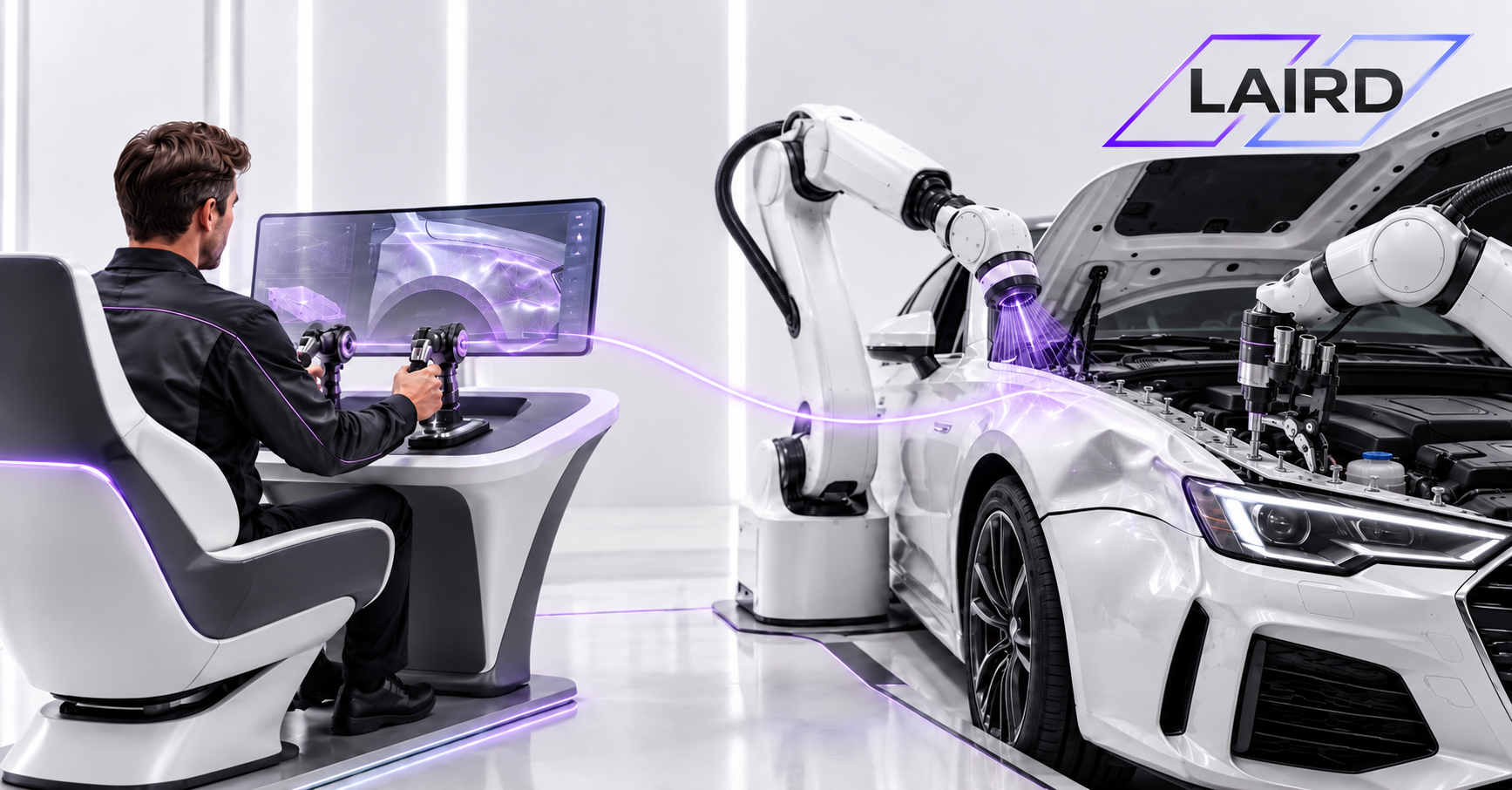
Instead, robotics is likely to enter accident repair one operation at a time. The first wave may concentrate on work that is dangerous, physically demanding, measurable and repeatable. Or it may first hit the 'low-hanging fruit', the operations that are the easiest to automate. VDAs will continue to diagnose damage, determine repair methods and approve safety-critical outcomes, while robots increasingly perform defined tasks within those strategies.
The timescales discussed here are necessarily speculative. Artificial intelligence, machine vision and general-purpose robotics are developing rapidly, and progress may accelerate faster than current industry investment cycles suggest. Equally, technical capability does not automatically produce commercial adoption. Vehicle variation, capital costs, insurer approval processes, access to OEM data, regulation and liability could all slow deployment. The direction of travel is becoming clearer, but the rate of change remains highly uncertain.
The digital repair comes first
The key development may not be the robot itself, but the creation of a sufficiently accurate digital description of each repair. Before a robot can work on a damaged vehicle, the bodyshop must know what the vehicle is, how it differs from its original geometry, which systems have been affected and what repair methods are permitted.
A future repair could begin with diagnostic scanning, high-resolution photography and three-dimensional measurement of the body and exterior surfaces. Indeed some jig manufacturers are more than a few steps down this road. Software would combine this information with the vehicle identification number, specification, construction materials, fitted safety systems and OEM repair instructions. The result would be a digital repair plan identifying the operations, tools, consumables, calibrations and quality checks required.
This digital plan would also need to recognise uncertainty. A system might identify likely hidden damage or flag an area for physical investigation before producing a final method. Human authorisation would remain important, particularly where the decision is not simply how to complete a repair, but whether the vehicle can be safely and economically repaired at all.
Manufacturers are already demonstrating some of the enabling technology. At its Regensburg plant, BMW uses artificial intelligence to direct robots to individual paint defects. The robots sand and polish different locations on each vehicle rather than following one fixed program, although employees continue to complete the final inspection. The application is within manufacturing rather than accident repair, but it demonstrates how vision, AI and robotics can respond to variable defects. BMW Group
This combination of automated execution and human release is likely to become a defining feature of the robotic bodyshop.
MET will develop through human-robot collaboration
MET (Mechanical, Electrical and Trim) operations appear straightforward when described as removing and refitting parts, but dismantling a crashed vehicle is much harder to automate than assembling an undamaged one. A bumper may be distorted against its mountings, a wiring connector may be inaccessible and a hidden clip may behave differently because the surrounding panel has moved.
The first useful MET robots are therefore likely to work alongside technicians. Collaborative robots could support bumpers, doors, tailgates, dashboards, glass and battery packs while a technician releases fasteners and connections. Automated tools could remove wheels, exposed bolts and undertrays, manage fluids and record the torque applied to every safety-relevant fastening.
For manufacturer approved bodyshops handling large numbers of the same vehicle, model-specific automation may become viable. Once an estimator has inspected the damage and confirmed that the planned sequence is safe, a robot could undertake routine removal and installation of lamps, bolt-on panels, bumper assemblies or interior components. The commercial case will be strongest where the work is predictable and the equipment can remain highly utilised.
Humans will remain central where components are damaged, seized, concealed or safety-critical. High-voltage isolation, pyrotechnic systems, airbags and heavily displaced structures leave little room for an automated system that cannot understand an exception. The MET technician’s role may gradually move away from lifting and repetitive fastening and towards diagnosis, supervision and intervention when the expected process no longer matches the vehicle.
Structural repair requires more than accurate movement
Robots are already capable of drilling, cutting, welding and applying adhesives with extraordinary precision. The obstacle to automating structural repair is not primarily the ability to move a tool. It is the need to determine what should be done to a particular damaged structure.
Future jigs & repair benches could combine live three-dimensional measurement with digitally controlled pulling equipment. The system could monitor datum points as loads are applied and continuously adjust the direction and magnitude of each pull. Robots might position clamps, remove coatings from joining areas, drill out spot welds and cut along sectioning lines defined by the manufacturer.
Once the repair strategy has been approved, robots could apply structural adhesive, seam sealer and corrosion protection with consistent bead size and position. They could also perform specified welding or brazing operations while recording temperatures, weld locations and process parameters. A further scan would then verify that the repaired structure was within tolerance.
This level of automation will depend on reliable, machine-readable repair information. Modern vehicles use increasingly complex combinations of conventional steel, ultra-high-strength steel, carbon fibre, aluminium, composites, cast structures and battery enclosures. A repair can be geometrically accurate but unsafe if it uses an unauthorised sectioning point or introduces excessive heat into the wrong material. OEM repair instructions will therefore need to become an active input to the robotic process rather than a document consulted separately by a technician.
Panel replacement is likely to be automated before complex panel repair because the required geometry and joining locations are more clearly defined. High-volume repair centres could eventually develop structural cells for common vehicle families. More unusual repairs would continue to rely on skilled technicians using robotic tools where they provide a clear advantage.
Panel beating will remain one of the harder challenges
Traditional panel repair relies heavily on sensory judgement. An experienced panel-beater assesses reflections, sound, spring-back, surface tension and the movement of adjacent areas. Much of this knowledge is difficult to translate into a fixed sequence.
Nevertheless, robotics could gradually take over parts of the operation. A vision system could compare a damaged panel with its intended surface and map the high and low areas. Force-controlled tools could apply a series of measured pushes or pulls, rescan the panel and adjust the process after each movement. Other systems could dispense a calculated amount of filler and complete the initial shaping.
Robotic sanding is considerably closer to widespread adoption. Force-sensing systems can maintain contact pressure across curved surfaces, compensate for tolerances and change abrasives automatically. Such systems are already used in automotive manufacturing for sanding, polishing and paint-defect correction. FerRobotics
The likely medium-term model is therefore automated scanning, rough correction and sanding, followed by a skilled technician completing the most demanding metal finishing and final surface assessment. Sharp feature lines, stretched aluminium and previous repairs may remain difficult to automate long after routine surface preparation has moved into robotic cells.
Paint offers the clearest early opportunity
Of the principal bodyshop disciplines, paint has the strongest potential for substantial automation. The work already takes place in a controlled environment and many of its critical variables such as spray gun distance, angle, speed, overlap, air pressure and material flow, which can be measured and repeated.
A robotic paint process could eventually scan the repair, identify remaining surface defects, sand the area, clean the substrate, mix the required colour and apply primer, basecoat and clearcoat. Automated infrared or ultraviolet systems could cure the coating, after which machine vision would inspect colour, gloss, texture and inclusions. Any identified defects could then be sanded and polished automatically.
The business case is not limited to productivity. Paint spraying, sanding and welding expose bodyshop employees to potentially harmful substances. T he Health and Safety Executive identifies isocyanates, preparation dust and welding fumes as significant health risks in motor body vehicle repair. Moving selected operations into enclosed automated cells could reduce exposure while producing more consistent process records.
Automation is likely to begin with complete detached panels and batches of bumpers, doors or wings. These can be presented to the robot in known positions and painted without requiring the system to navigate an entire vehicle. BASF has identified standardised applications of primer, base-coat and clear-coat on complete parts as an initial focus for bodyshop robotics, with blending and interior painting expected to become more practical as the technology develops. BASF Coatings
Blending aged or previously refinished paint will remain more difficult. Pearlescent or Metallic orientation, irregular blend boundaries, masking decisions and the subjective assessment of texture under different lighting conditions all introduce variability. Robots may execute the process, but experienced painters are likely to retain responsibility for colour strategy and final approval.
ADAS and geometry will become more automated, but not less important
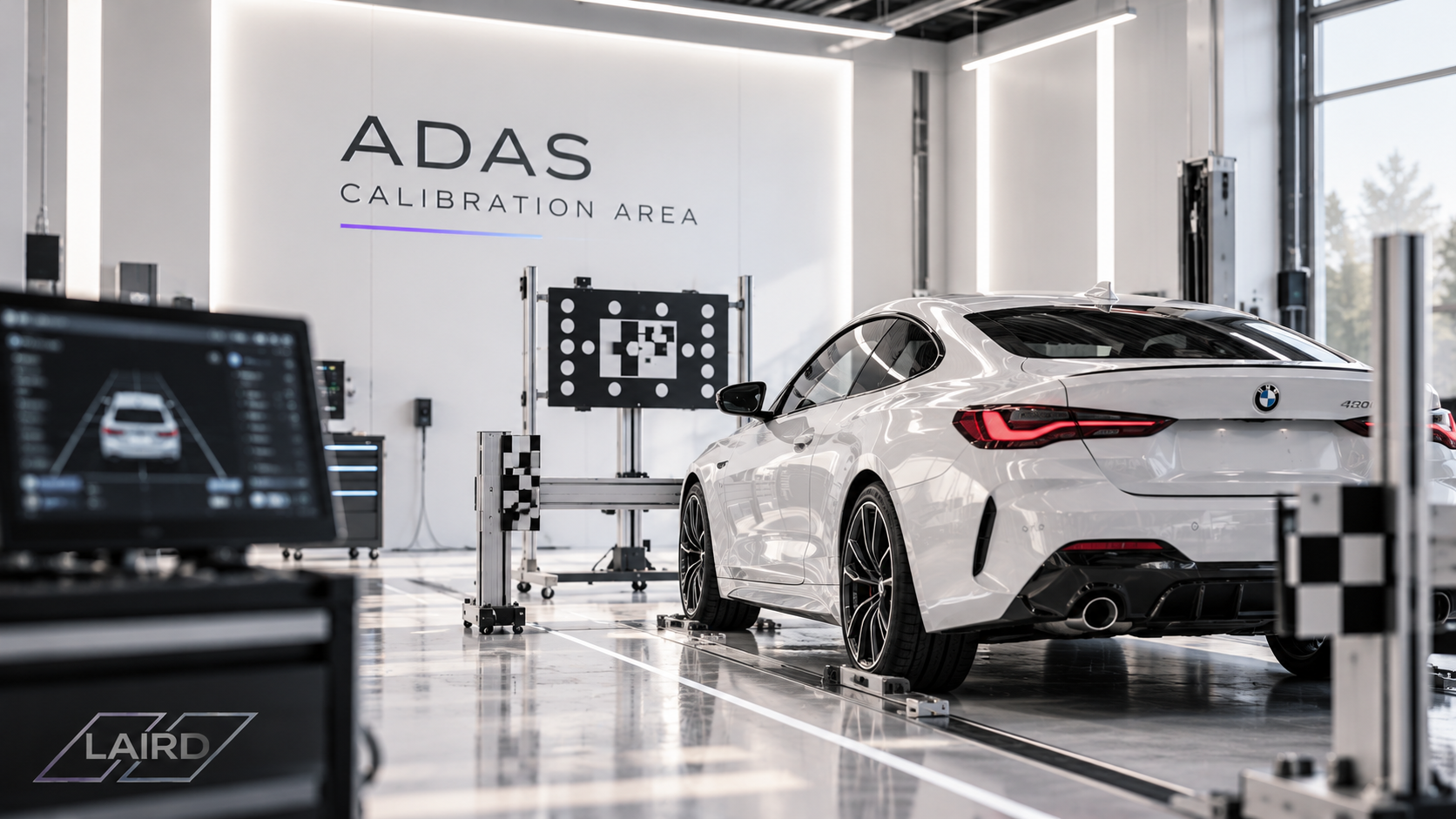
Advanced driver assistance systems and steering geometry are well suited to measurement automation. Robotic fixtures could position calibration targets, verify distances and angles, check vehicle preparation conditions and connect diagnostic equipment. Automated alignment systems could measure and adjust geometry while creating a complete digital record.
However, successful calibration depends on selecting the correct procedure for the vehicle and the repair undertaken. Some systems require static calibration, others require a dynamic road process and some require both. Vehicle load, tyre pressure, floor level, lighting, road markings and environmental conditions may all affect the procedure.
I-CAR’s guidance emphasises the use of OEM information, appropriate aiming equipment, correct preparation and post-repair scanning. It also notes that some systems require specific road conditions or will only identify problems once the vehicle has been driven. I-CAR
Automation should therefore improve setup accuracy and traceability, but it should not turn calibration into an unquestioned push-button exercise. A competent person will still need to establish which systems were affected, confirm that the required conditions were met and accept responsibility for the result.
Estimating will also become part of the automated process
Not every important development will involve a physical robot. Estimating and production management systems will increasingly compare scan data, OEM methods and proposed repair operations to identify missing work.
This is particularly relevant to manually added operations commonly entered through Zone 99. Additional preparation, masking, cleaning, corrosion protection or work required on a recycled component may not be included automatically within a standard repair method. Software could identify these requirements as part of the digital repair plan and provide supporting evidence before authorisation is sought.
Audatex already allows repairers and work providers to configure Zone 99 items within estimating profiles. The next stage could be for those items to be suggested automatically from the physical condition of the vehicle and the selected repair method. Audatex
For repairers, this may be as commercially significant as automating a workshop operation. A robotic process will only be viable if every necessary stage is recognised, authorised, measured and paid for.
A possible timeline
During the next few years, adoption is likely to concentrate on AI-supported assessment, robotic sanding and polishing, automated paint application, curing, component handling and vision-based inspection. Cobots may become more common as lifting aids, while diagnostic, geometry and calibration equipment becomes increasingly guided and automated.
Over a longer period, multifunction preparation cells could scan, sand, prime and inspect panels with limited intervention. Robots may undertake selected MET sequences, apply adhesives and corrosion protection, or execute approved cutting and joining operations on common vehicle platforms. Bodyshop technicians could supervise several cells while concentrating on diagnosis and exceptions.
More extensive autonomous repair may eventually become possible, particularly for standardised cosmetic damage or fleets containing large numbers of similar vehicles. Mobile dual-arm robots, digital twins and AI-generated repair programs could allow a machine to complete a sequence of dismantling, repair and refitting operations. Whether that arrives within seven years, 15 years or longer cannot be predicted reliably. A significant breakthrough in general-purpose robotics or embodied AI could compress the timeline, while regulation, liability and weak returns on capital could extend it considerably.
The strategic question for repair leaders
For bodyshops, insurers and vehicle manufacturers, the question is whether today’s facilities, data and processes are capable of supporting progressively greater automation.
Robotics will favour organisations with consistent workflows, accurate estimating, disciplined quality control, strong technical training and access to OEM repair information. High vehicle volumes and some degree of platform standardisation will improve the investment case. Poor data, variable processes and undocumented technician knowledge will make automation difficult regardless of how capable the robot becomes.
The future bodyshop is unlikely to be an entirely unmanned facility. It is more likely to be a digitally controlled repair environment in which machines undertake hazardous and repeatable work while people retain authority over diagnosis, exceptions, safety and final quality.
The technology is still developing and any proposed timeline should be treated as informed speculation rather than a forecast. What appears relatively certain is that automation will arrive by operation rather than by occupation. Robots will not replace the bodyshop in a single step. They will gradually change what each department does, how repairs are planned and evidenced, and where the industry applies its increasingly scarce human expertise.