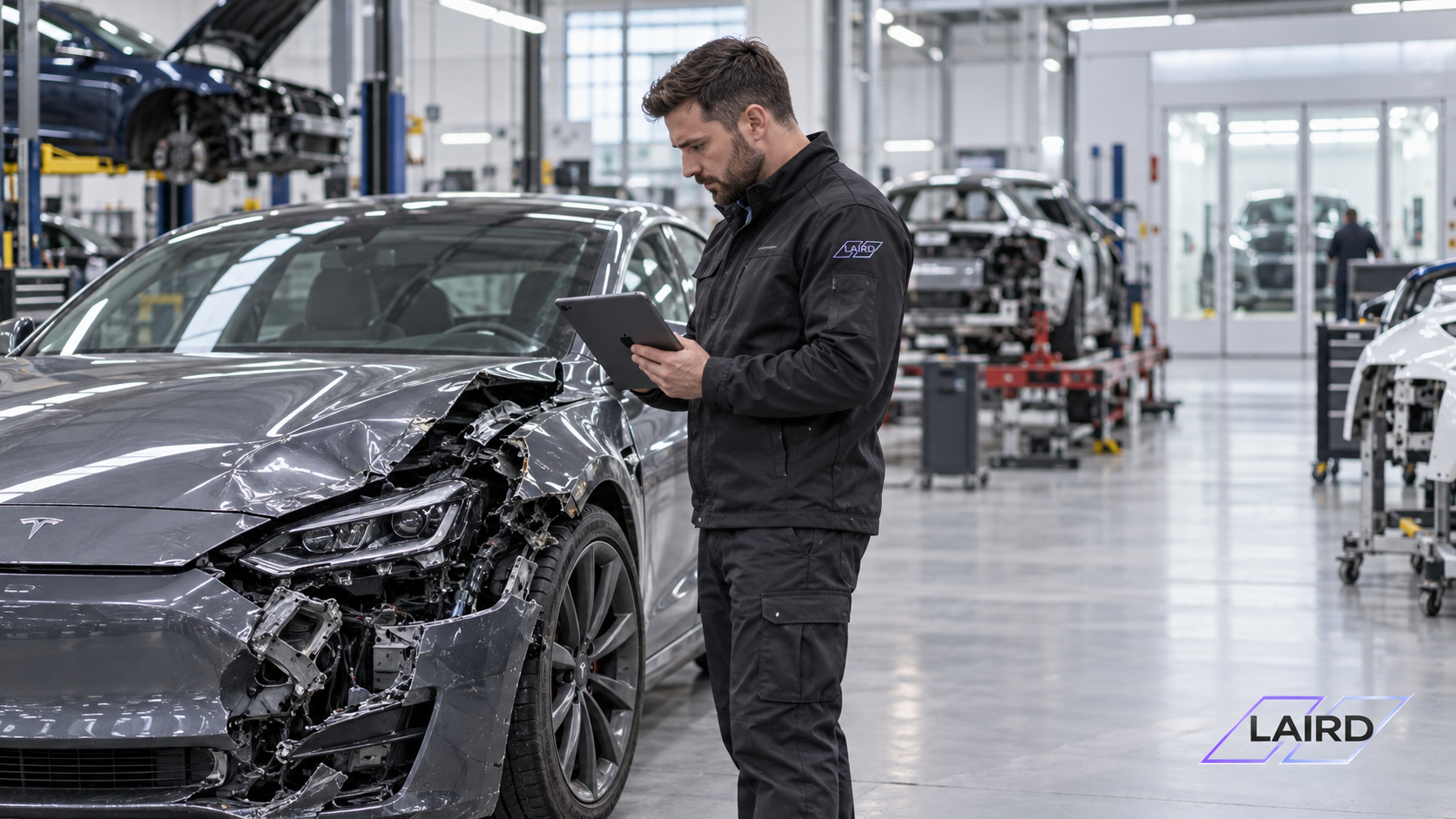
If you give an engineer enough time, money and enthusiasm, most vehicles become repairable. The question is, should they actually be repaired in the first place? That decision, made early, can shape the whole claim.
The first estimate tells half the story
Modern vehicles have a habit of making simple impacts complicated. Bumpers used to be metal bars & a couple of brackets, whereas now they’re complex multi-material items often laden with ADAS sensors & equipment. Exposing their damage can all turn a modest-looking repair into a poor commercial decision.
This is where experienced engineering judgement earns its keep. Not just looking at the estimate, but understanding what is likely to happen next.
If a repair is heading towards a total-loss threshold but the signs point towards further cost, delay or complexity, pushing ahead can simply mean arriving at the same total loss decision a week later, only with more hire, storage and frustration attached to it.
However this works both ways:
Total Loss + Conversation = Repair
We regularly see vehicles heading down the total loss route that may be possible to save.
A borderline case can sometimes be saved by getting the engineer, repairer and claims handler talking early enough. There may be alternative repair methods, sensible use of green (recycled) or non-OE parts, labour reductions, estimate items worth challenging or a salvage assumption that needs another look.
None of this means cutting corners. Total loss avoidance only works when the repair remains safe, appropriate and economically sensible.
What it does mean is not treating a percentage on a screen as the final word.
A few sensible interventions can move a vehicle from a write-off into viable repair territory, which can be better for the bodyshop & policy-holder, save insurer costs and, frankly, a perfectly good car that did not deserve an early trip to salvage.
The real decision is the direction of travel
For claims handlers, this is important; the early repair-or-total-loss triage affects hire teams, storage & recovery costs, repairer capacity, key-to-key times, customer experience and overall insurer spend.
Technology can help flag the risks earlier and get the right information in front of the right people faster. But the important bit is still the judgement behind the decision.
The skill is in knowing when to repair a car, when to stop, and when a supposed total loss is worth saving.
Reproduced with kind permission of Modern Insurance Magazine