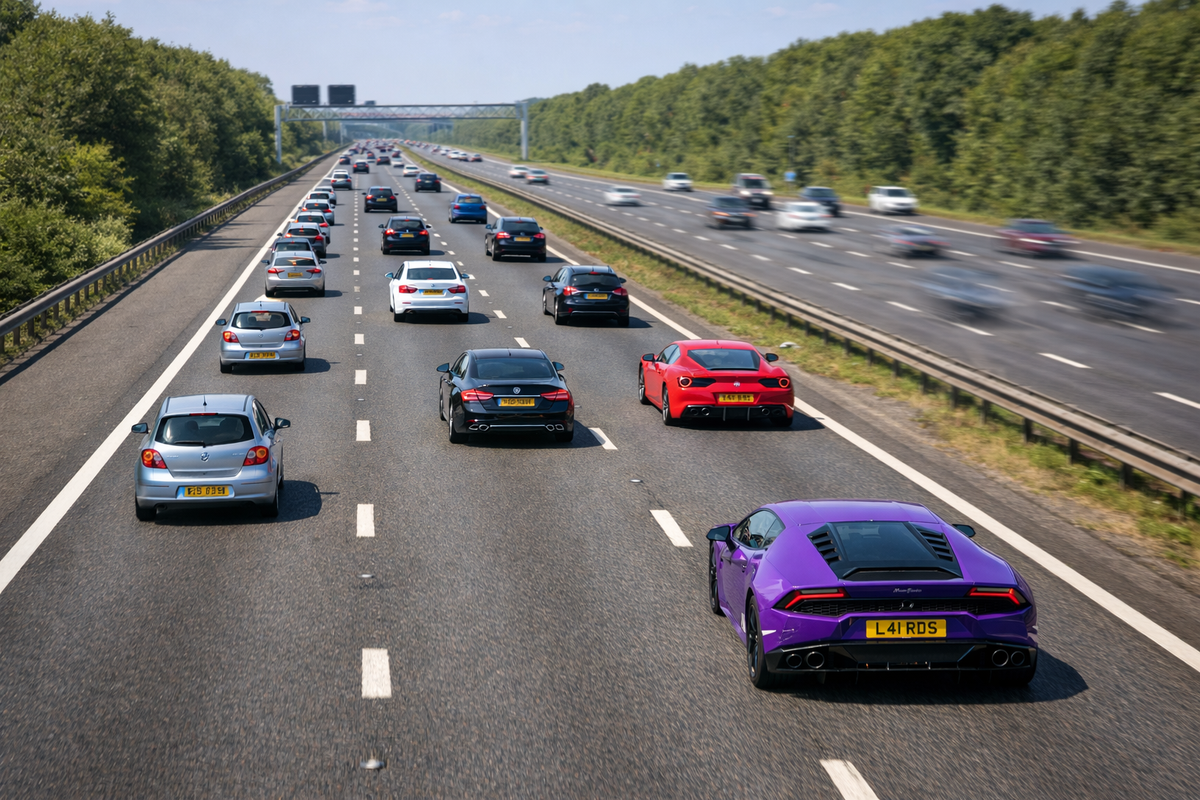
The 70mph motorway speed limit, established in 1967, hasn't changed despite dramatic improvements in vehicle safety, tire technology, braking systems, and driver-assistance features. The most recent compliance data shows a substantial minority (often a large one, depending on road type and conditions) exceeds the posted limit. One driver per six hours is caught at 112mph+.
The Economic Case
If 10% of motorway miles permitted 80mph instead of 70mph, approximately 12.5 million hours would be saved annually. Selective increases on free-flowing sections could improve productivity without blanket deregulation.
Motorways have very low casualty involvement relative to the traffic they carry; they're the controlled environment of the road network. Variable speed limits already manage congestion during peak periods, suggesting that targeted increases on naturally stable sections remain practical.
The Licensing Problem
Here's the critical gap: drivers can legally use motorways throughout their lives after passing a single test at age 17, often without formal motorway instruction. Additionally, someone trained in a modest vehicle faces no additional requirements before driving high-performance cars with vastly different handling characteristics.
Proposed Solution: Graded Licensing
Rather than simply raising limits, a tiered system could include:
Base licence: Standard cars with mandatory motorway competency
Advanced motorway endorsement: Required for driving speeds above 80mph
High-performance endorsement: Required for vehicles exceeding specific power-to-weight thresholds
Light periodic revalidation: Online refreshers rather than full retests
Evidence
Graduated licensing approaches reduce novice driver collisions by 20-40% in international implementations, suggesting structured training correlates with improved safety outcomes.
Conclusion
Higher speeds and better drivers represent complementary policy goals, not opposing ones. The question isn't whether we can have faster roads-it's whether we're willing to update the whole system, not just the signs.