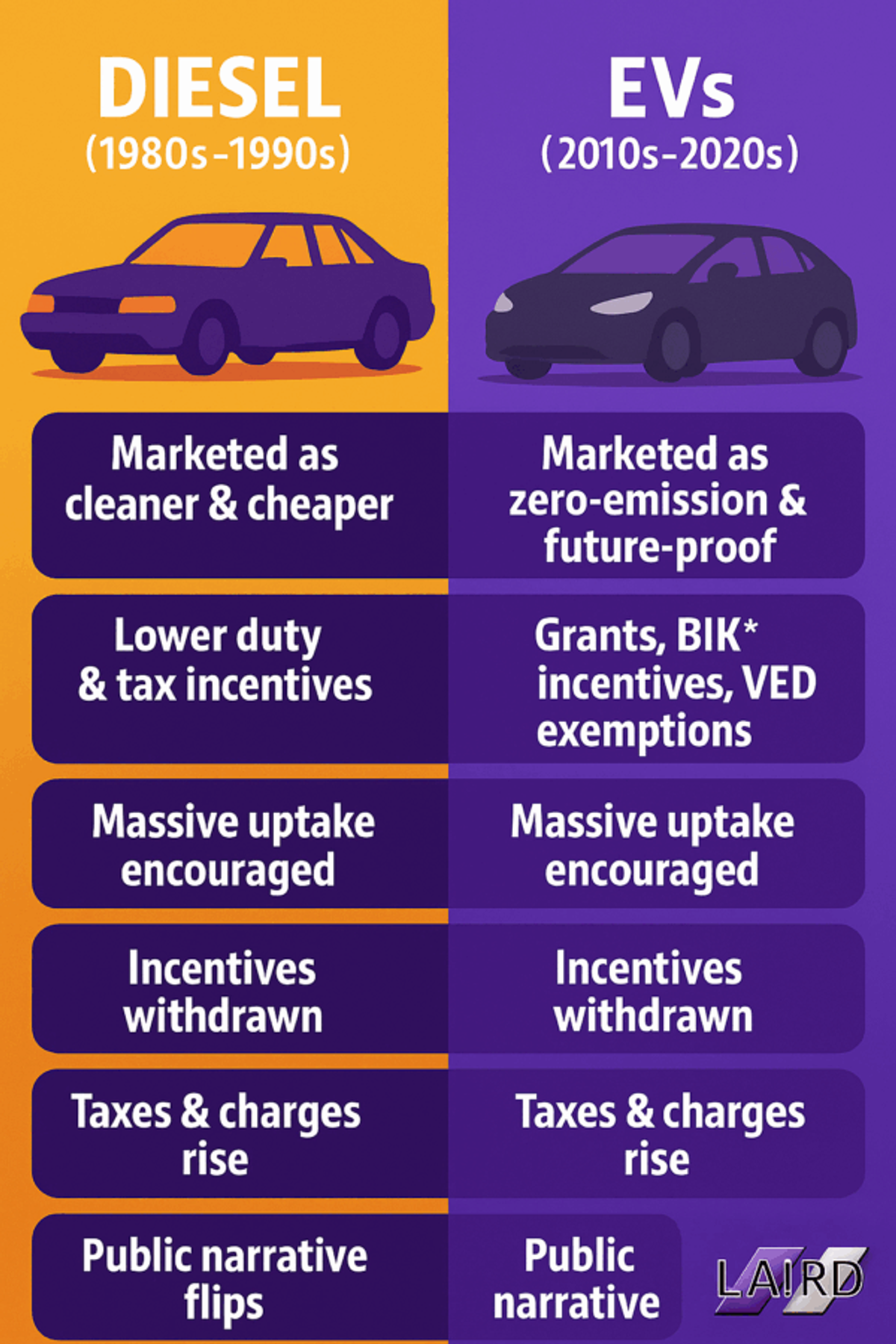
If you've been driving long enough, the current situation with electric vehicles feels suspiciously familiar. In the Nineties & early Naughties, the government spent years encouraging drivers to abandon petrol and embrace diesel.
People listened. Fleets switched. Families upgraded. But then the tone changed. Incentives were quietly withdrawn, and diesel cars once praised as eco-friendly rapidly became no different to petrol.
Phase 1: Encourage the switch
Over the last decade, the UK government has strongly promoted electric vehicles:
The Plug-in Car Grant knocked thousands off list prices
Company car drivers enjoyed extremely low Benefit-in-Kind tax rates
EVs were exempt from the London Congestion Charge
Road tax incentives made EVs the financially sensible choice
Phase 2: Withdraw the incentives once the public has committed
Then, almost as predictably as clockwork, the incentives started disappearing:
The main purchase grant was axed entirely
Benefit-in-Kind rates on EVs have been scheduled to rise year after year
EVs will no longer be exempt from the London Congestion Charge
Road tax (VED) exemptions are ending
Why does this keep happening?
At the heart of it is a pattern of policymakers prioritising short-term behaviour change without committing to long-term support.
Motorists deserve better
No one disputes the need for cleaner transport. But the "bait and switch" approach undermines public trust, punishes early adopters, and makes people wary of the next major shift.
If we want a greener, fairer transport future, the government must learn the lessons of the diesel saga.