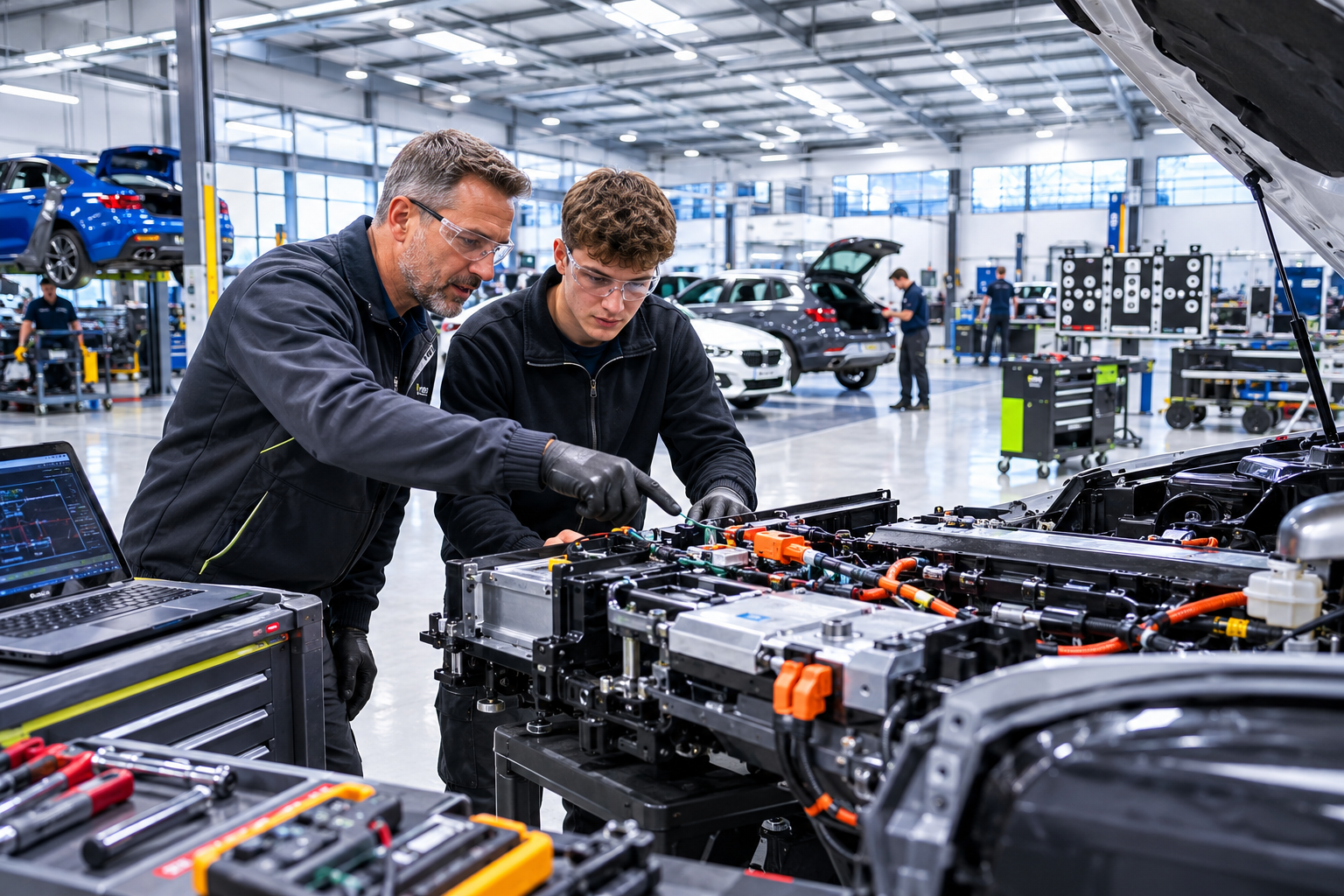
The recent article from Bodyshop Magazine industry leaders have urged the government to standardise IMI TechSafe to ensure the safe repair of modern vehicles.
Walk through any modern repair centre today and you will see something very different to the workshops many technicians entered 15 or 20 years ago. Beneath the panels and paintwork now sits a network of high voltage systems, radar sensors, cameras, autonomous safety functions and increasingly complex software. Even a relatively minor impact can affect systems that are responsible for lane keeping, emergency braking, occupant protection and battery safety.
That is why the growing call for IMI TechSafe to become an industry wide repair standard matters enormously, and we're not talking about another qualification or another certificate on a workshop wall. It is about protecting motorists, safeguarding technicians and ensuring the repair sector keeps pace with the technology now arriving in our workshops every single day. (ABP Club)
As engineers, we have always adapted. The industry moved from carburettors to fuel injection, from steel bumpers to advanced composites, from simple wiring looms to multiplex systems. However, the pace of change we are seeing now is unlike anything before. Electric vehicles, hybrid systems, ADAS technology and connected vehicle architecture have fundamentally changed the repair process.
A modern bumper repair is no longer just cosmetic. Behind that bumper may sit radar units controlling autonomous emergency braking. A windscreen replacement may require precise camera calibration to ensure lane assist functions operate correctly. Structural repairs on electric vehicles involve consideration of battery placement, isolation procedures and manufacturer specific safety requirements. Mistakes aren't just expensive, they can be dangerous.
The Institute of The Motor Industry (IMI) has been clear that TechSafe is intended to become the recognised benchmark for competence across EV, hydrogen and ADAS equipped vehicles. That ambition deserves strong support from across the sector.
One of the biggest challenges facing the industry is that vehicle technology is advancing faster than workforce development. Recent IMI reporting has already warned that EV training investment is slowing, despite the growing number of electric vehicles entering the UK parc. (Bodyshop Magazine) At the same time, the shortage of skilled technicians entering the trade continues to worsen. That creates a potentially dangerous gap.
Consumers are buying vehicles equipped with increasingly sophisticated safety systems, yet the industry is struggling to attract and retain enough properly trained technicians to repair them. The reality is that many younger people still see the motor trade through an outdated lens. They picture oily overalls and spanners, not diagnostics, calibration rigs, software integration and high voltage safety systems. The truth is that the modern accident repair industry is now highly technical engineering work.
Today’s technicians require knowledge of electronics, structural materials, networking systems, battery technologies and digital diagnostics alongside traditional repair skills. In many cases, they are working at a level comparable to aerospace or industrial engineering environments. That message needs to be communicated far more effectively to schools, colleges and young people considering future careers.
Standards like IMI TechSafe can help elevate the perception of the industry. Professional recognition matters. It demonstrates that technicians are maintaining current knowledge, completing ongoing CPD and operating safely within rapidly evolving technologies.
From an engineering perspective, consistency is critical. At present, training and competency levels can vary significantly across the sector. Some repairers invest heavily in equipment, training and manufacturer approvals. Others may not, and that inconsistency creates risk, particularly as more safety critical systems become integrated into everyday vehicles.
A standardised framework helps create accountability. It gives insurers, repairers and consumers confidence that the person working on the vehicle understands the systems involved and follows recognised safety procedures. In time, it could become as essential to modern repairs as BS10125 is today.
There is also a wider reputational issue at stake for the industry itself. Public trust in vehicle repair is vital. Research has previously shown that many EV owners already worry about whether their vehicles can be repaired safely following a collision. Those concerns will only grow as vehicles become more automated and technologically advanced.
If the industry fails to demonstrate competence and professionalism, regulation will inevitably become more prescriptive. The repair sector has an opportunity now to lead from the front and establish meaningful self regulation through recognised competency standards before external pressure forces the issue.
Importantly, this conversation is not limited to electric vehicles anymore. ADAS systems are already widespread across mainstream vehicles, and hydrogen technology is beginning to emerge. Over the next decade, workshops will increasingly encounter vehicles with advanced autonomous features, over the air software integration and even greater reliance on sensor accuracy.
The days when a repair ended once the paint had cured are long gone. Repairs now require validation of safety systems, correct calibration procedures and precise adherence to manufacturer methods. A vehicle can look perfect cosmetically while still being unsafe electronically. That is a reality the entire industry must acknowledge.
There is also a commercial argument for adopting higher standards. Insurers, fleets and manufacturers are placing increasing emphasis on verified competence and safe repair methodology. Workshops investing in recognised training and accreditation are likely to be better positioned for future repair opportunities as vehicle technology evolves further. Most importantly of all, though, this is about people.
It is about ensuring technicians return home safely after working around high voltage systems. It is about ensuring families travel in vehicles whose safety systems will function correctly in an emergency. It is about protecting the long term credibility of an industry undergoing enormous technological transformation.
The repair sector has always been resilient. It has adapted repeatedly through decades of change. But the transition taking place now requires more than adaptation alone. It requires structured investment in skills, professional standards and ongoing competency.
IMI TechSafe becoming an accepted repair standard would be a major step in the right direction. Not because it solves every problem overnight, but because it establishes a clear expectation that modern vehicle repair demands modern engineering competence. It's no longer optional; it is essential.