The Institute of the Motor Industry's latest report, Understanding the UK Accident & Repair Workforce, highlights a challenge that many of us working in the sector have recognised for some time: the UK accident repair industry is facing a growing shortage of skilled people.
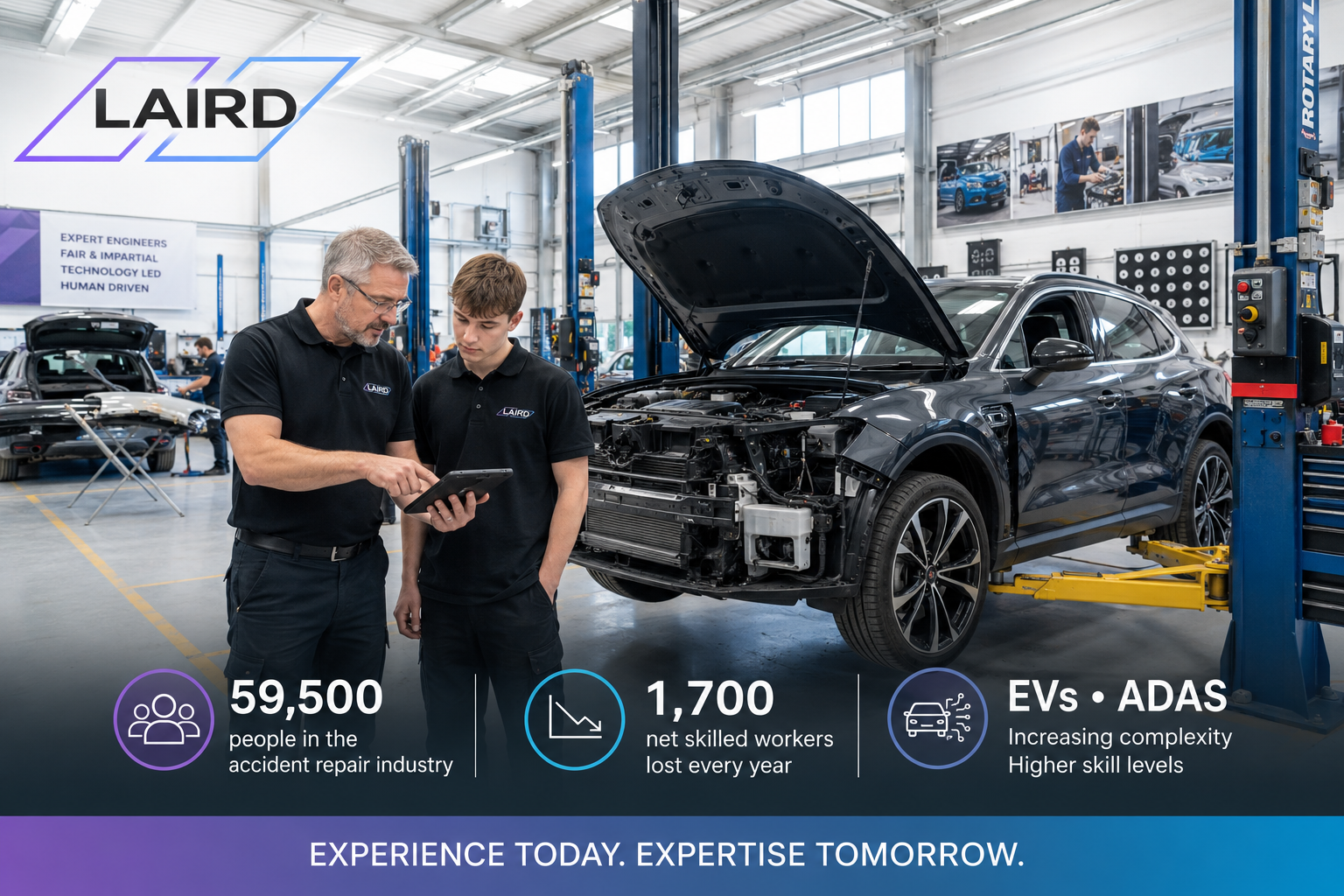
According to the report, the sector currently employs around 59,500 people. Each year, however, approximately 4,700 leave the industry while only around 3,000 join, creating a net loss of roughly 1,700 skilled workers annually. Unless that trend changes, the skills gap will continue to widen.
The shortages are particularly acute in specialist disciplines including vehicle paint technicians, body repair technicians and autoglazing. With an ageing workforce and relatively few younger technicians entering these trades, the industry faces a significant challenge in maintaining both capacity and quality.
The IMI also highlights another important factor: today's vehicles are becoming considerably more complex. Electric vehicles, advanced driver assistance systems (ADAS) and increasingly sophisticated vehicle technology demand higher levels of technical knowledge than ever before. Repairing modern vehicles safely and correctly is no longer simply a question of replacing damaged parts. It requires ongoing training, experience and access to the right information.
Training remains another concern. While apprenticeships continue to play a vital role, the report suggests that current training provision is not always aligned with the areas experiencing the greatest shortages. Encouraging more people into the industry is only part of the solution. Ensuring they develop the skills most needed by today's repair sector is equally important.
If these trends continue, the consequences are likely to be felt throughout the claims and repair ecosystem. Longer repair times, reduced bodyshop capacity, increasing competition for experienced technicians and rising repair costs are all likely outcomes. Ultimately, insurers, fleets, repairers and motorists alike could all experience the effects.
The IMI's recommendations are clear; the industry must attract more people into accident repair careers, better align training with the skills genuinely in demand, and improve retention so experienced technicians remain within the profession.
At Laird, we welcome research that shines a light on these challenges. The accident repair industry has continually adapted to new technologies, new repair methods and increasing vehicle complexity, and this is another opportunity for the sector to evolve. Investing in people, maintaining high engineering standards and supporting repairers with the right expertise will be essential if the industry is to meet future demand.
For bodyshops facing increasing workloads or temporary resource pressures, our experienced engineering team can provide high-quality estimating support using Audatex, Repair Estimate and GT Motive for overflow capacity, independent estimating expertise or rapid turnaround during busy periods.
If you'd like to discuss how Laird can support your estimating operation, we'd be delighted to hear from you.