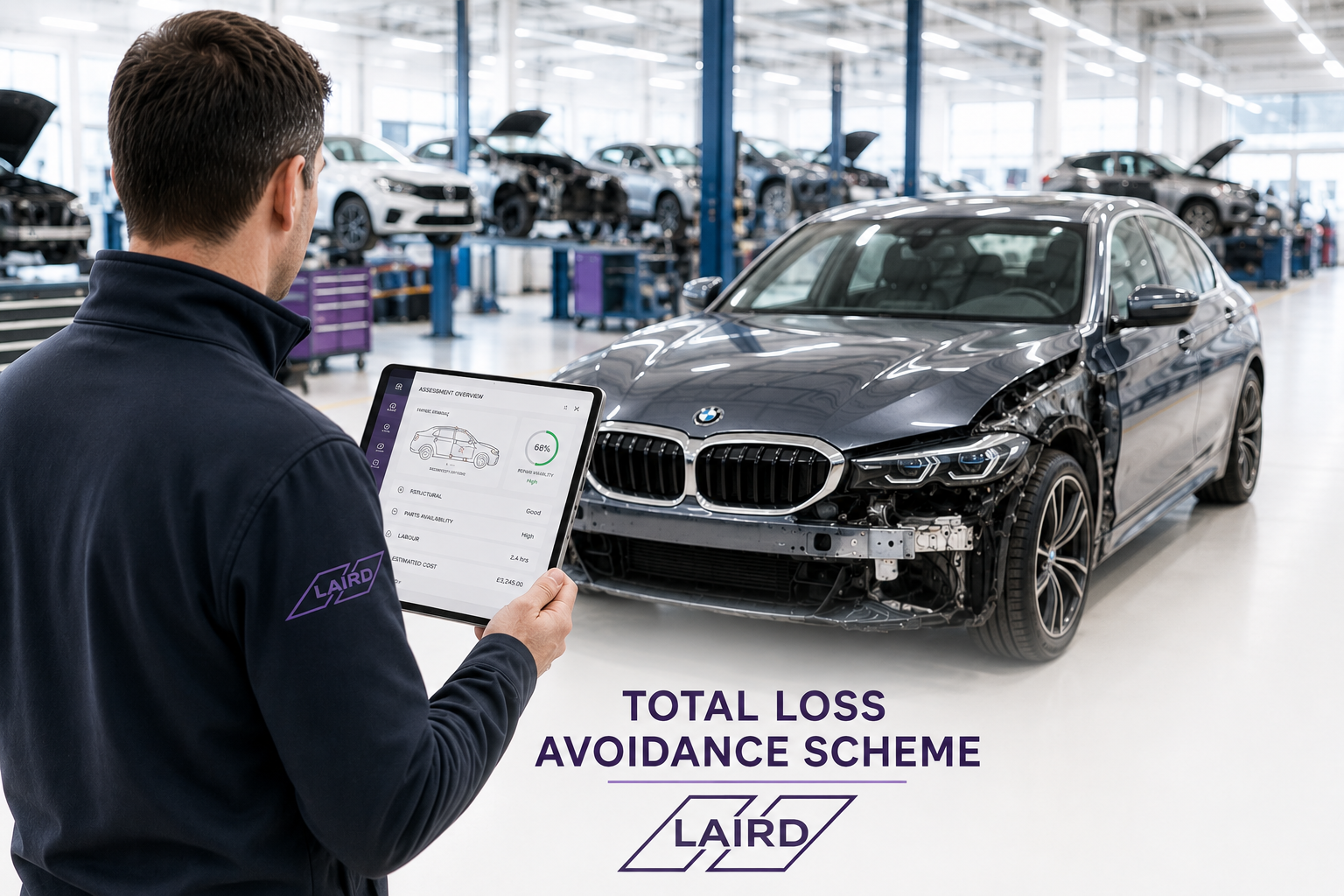
Are Rising Write-Off Rates Threatening the Future of Vehicle Repair?
As independent automotive assessors, we spend much of our time reviewing vehicles that sit on the borderline between repair and total loss.
Increasingly, we're seeing vehicles written off that, only a few years ago, would almost certainly have been repaired.
The reasons are well known. Vehicle technology is more complex, parts prices continue to rise, labour rates have increased and specialist procedures such as ADAS calibration add further cost to the repair process.
What concerns us is the amount of perfectly viable repair work being lost from the industry.
Across the UK, bodyshops have invested heavily in facilities, equipment, technician training and manufacturer approvals, yet more repairable vehicles are being pushed into total loss territory because repair economics have become increasingly challenging.
For repairers, this represents lost opportunities, reduced workshop utilisation and pressure on long-term profitability. For the wider industry, it raises an important question:
Are we allowing repair costs to dictate outcomes when a safe, manufacturer-compliant repair may still be achievable?
The Perfect Storm Facing Modern Repairs
Modern vehicles contain more technology than ever before. ADAS systems, cameras, radar sensors, LED lighting, electric vehicle components and increasingly complex materials have transformed vehicle repair.
While these innovations improve safety, they have also increased repair costs significantly.
A low-speed collision that once required a bumper repair may now involve sensor replacement, calibration procedures, diagnostic checks and manufacturer-specific repair methods.
Add rising labour rates, skills shortages and increasing OEM parts prices, and it becomes easy to see why so many vehicles now sit on the edge of economic repair.
Why Assessors Should Be Looking for Solutions
The role of an assessor should never be simply to determine whether repair costs exceed a financial threshold.
Our responsibility is to establish whether a safe and compliant repair remains achievable and, where appropriate, identify opportunities to make that repair economically viable.
At Laird, we regularly work with manufacturers, insurers and repairers to explore options that can prevent unnecessary total losses.
This may include:
Securing OEM parts support or discount programmes.
Reviewing repair methodologies with manufacturers.
Identifying more efficient repair strategies.
Challenging unnecessary operations within repair estimates.
Exploring approved alternative parts solutions where appropriate.
Working collaboratively with bodyshops to achieve commercially viable outcomes.
In many borderline cases, relatively small cost reductions can be the difference between a write-off and a repair.
Protecting Repair Work in the Industry
Every unnecessary total loss represents work that could otherwise support skilled technicians, apprentices, repair centres and the wider automotive repair sector.
Bodyshops have embraced new technologies, invested in training and adapted to increasingly demanding repair standards. The industry should ensure those investments are rewarded with repair opportunities wherever safe and practical. That does not mean repairing vehicles at any cost. Safety, structural integrity and manufacturer requirements must always come first.
However, where a compliant repair is achievable, assessors should be actively looking for ways to support repair rather than simply accepting total loss as the easiest outcome.
The Value of Independent Engineering Expertise
The best assessors do more than calculate repair costs. They understand repair techniques, manufacturer requirements, parts procurement, workshop operations and claim economics.
Most importantly, they understand that behind every borderline total loss is a bodyshop capable of carrying out a quality repair and a repair opportunity worth protecting.
In an era of rising write-off rates, independent engineering expertise has never been more important in helping insurers, repairers and manufacturers work together to keep safe, repairable vehicles on the road and valuable repair work within the industry.