Each year, the ABP State of the Industry report provides a snapshot of the UK body repair sector. The newly released 2025 edition reveals a market reshaped by technology, labour shortages, consolidation and changing insurer strategies.
From an engineering and assessment perspective at Laird, the findings signpost how workflows, technologies, and client expectations must evolve.
1. Repair Volumes Are Falling, Reshaping the Entire Ecosystem
The report confirms a structural shift: 44% of bodyshops saw lower repair volumes in Sept 2025 vs Sept 2024.
Causes include:
Safer vehicles and ADAS reducing collision frequency
High excesses discouraging claims
Rising DIY/online repair culture amplified by influencers
Insurers salvaging borderline-repairable vehicles more aggressively
Lower volumes mean every claim carries heightened operational value. Engineers must justify decisions with greater depth, accuracy and evidence. Investment in digital tools, image analysis, and data-backed methodologies becomes critical as each assessment must be defensible and technically robust.
2. Profitability Is Under Pressure Although Optimism Exists
A balanced but challenging financial picture emerged:
44% of repairers report profits down this year
39% saw improvement, showing fragmented market resilience
49% expect profits to rise next year
Significant pressures include shrinking margins, parts delays, unrealistic KPIs, rising wages due to skills shortages, and compliance/admin burden from insurers and AMCs.
When repair margins tighten, disputes increase. Expect more challenges to repair versus replace decisions, greater scrutiny of paint/material allowances, increased disputes around labour times and ADAS procedures.
The role of neutral expert becomes increasingly essential to ensure fairness, safety and cost accuracy.
3. Labour Rates Are Falling
Perhaps the most startling metric: Average net labour rate fell 4.7% year-on-year (48.23/hr vs 50.62/hr).
This decline occurs despite inflation, NI increases, rising energy costs, soaring investment requirements and higher staffing costs due to shortages.
Bodyshops believe a fair rate is approximately 61/hr, still 4% below last year's view of fairness.
Falling rates and rising complexity create tension around repair operation viability. Expect more pushback on repair method times, increased pressure to use green or aftermarket parts, and a shift toward "minimum viable repair" decision-making.
Engineers must champion OEM-correct, safe, compliant methods even when commercial pressures tempt shortcuts.
4. ADAS: The Biggest Technical Shift
The report shows dramatic capability shifts:
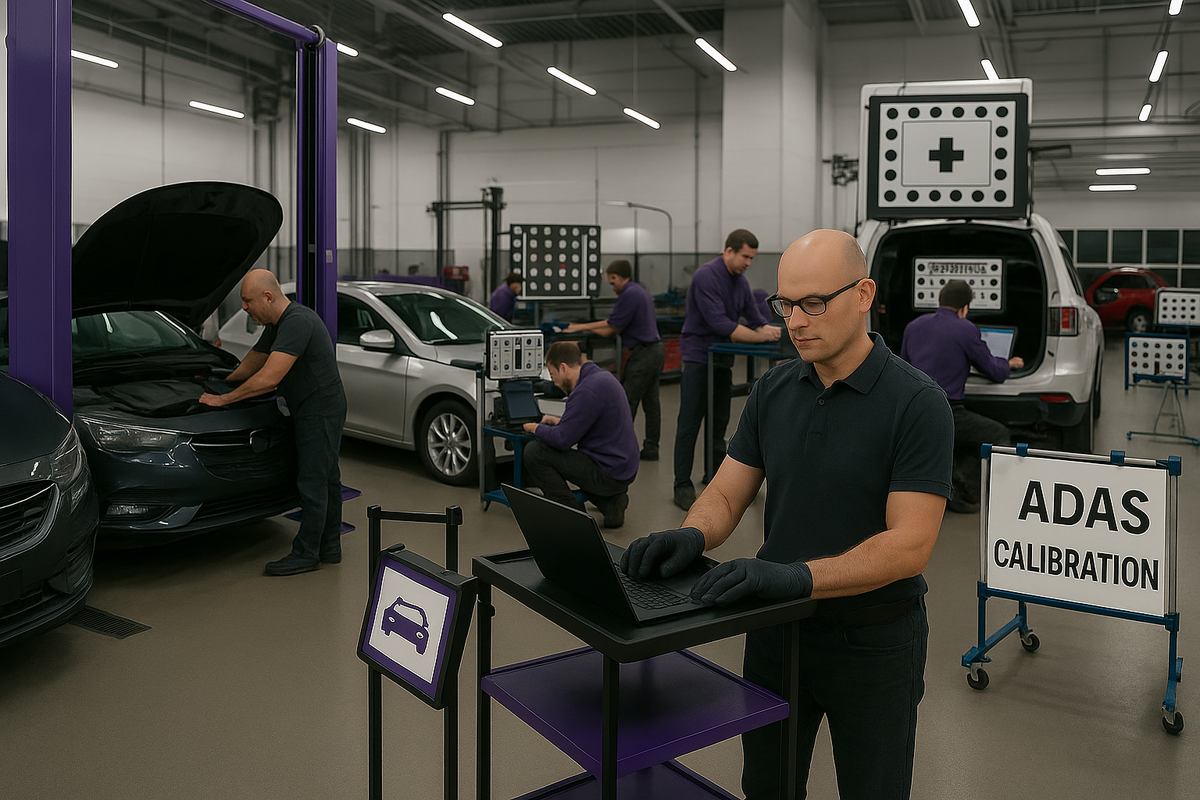
50% of ADAS alignments now carried out by bodyshops themselves
Only 6% go back to dealers
Specialist firms handle 44%
ADAS calibration has become one of the most contentious engineering subjects: whether calibration is needed, whether it must be dynamic, static, or both, what constitutes "disturbance", and whether remote providers meet OEM requirements.
Engineers must be the authoritative technical voice-evidence-led, OEM-led, and safety-led. As bodyshops bring ADAS in-house, expect more accurate repair flows and fewer delays, but also more variation in quality requiring expert auditing.
5. Green Parts Use at Record Levels
Key statistics:
91% of repairers now use green parts
75% have increased usage year-on-year
Main drivers are availability issues and avoiding total loss outcomes
Barriers remain: quality inconsistency, rectification work, policyholder resistance, and limited supply.
Green parts will continue featuring heavily in repair strategies, especially where salvage values are high, repairers face supply delays, or insurers prioritise economic repair ratios.
Engineers must carefully assess suitability, warranty implications, structural integrity, corrosion considerations and compatibility. "Green where appropriate" must remain the rule.
6. Skills Shortages Are Now Existential
Skills shortages remain a top three threat alongside low labour rates and insufficient repair volume.
While 77% of repairers employ apprentices, only 47% expect to take on new ones-the lowest since Covid. Retention is good, but recruitment remains difficult.
Consequences include increased lead times, inconsistency in estimates and repair quality, growing variance in engineering knowledge across the market, and higher likelihood of incorrect methods being attempted.
Accurate engineering oversight, training, and auditing become more important than ever.
7. Consolidation & Network Behaviour Are Reshaping the Landscape
The report reveals frustration particularly around aggressive expansion of large groups, insurer steering, conflicting KPIs, excessive admin and compliance burdens, and erosion of independence.
This reshapes competition at regional levels and alters claims flow. True independence becomes increasingly vital. When the same organisation controls work provision, cost control, auditing and sometimes repair capacity, impartiality suffers.
What This Means for Laird Assessors Going Forward
Engineering expertise will become even more valuable. As vehicles grow safer and more complex, every decision must be evidence-based and technically justified.
Digital assessment investment aligns with market needs. The industry moves toward precision and auditability-where Laird is strongest.
Collaboration will define the next chapter. Repairers, insurers, solicitors and AMCs navigate identical pressures. Laird translates technical truth into commercially and legally workable outcomes.
Expect more technical guidance requests. When volumes fall and margins tighten, disagreements rise, making expert engineering indispensable.
Safety and compliance remain the north star. No combination of KPIs, discounts or commercial deals can override modern vehicle structure physics, ADAS systems or EV battery safety.
An Industry Under Strain Yet Not Without Opportunity
The 2025 ABP report depicts a sector under intense pressure but not collapsing. There is resilience, innovation, and pride throughout.
Engineering remains constant-the anchor point that keeps repairs safe, fair and technically correct. The year ahead will be challenging but full of opportunity for those prepared to adapt, collaborate and uphold highest technical standards.